PhD Candidate · College of Computer Science
Zhejiang University · Hangzhou, China
“Designing Intuitive Human-AI Creative Systems”
Two papers accepted at CHI 2025 — IEDS and FusionProtor!
Paper on MR co-design communication accepted at CSCW 2025.
ProtoDreamer presented at UIST 2024 in Pittsburgh.
Paper on hybrid prototyping published in ACM TOCHI.
GPSdesign accepted at IJHCI 2025.
My research spans three interconnected areas at the intersection of HCI, AI, and creative design.
Integrating AI with creators' familiar tools and workflows to build efficient and intuitive generative creation systems.
5 publications →Combining AI and XR to explore intuitive, embodied creation methods in intelligent and generative design spaces.
3 publications →Understanding cognition and creativity in human-AI co-creation, focusing on human-machine relationships in collaborative design.
3 publications →8 highlighted works — scroll to explore
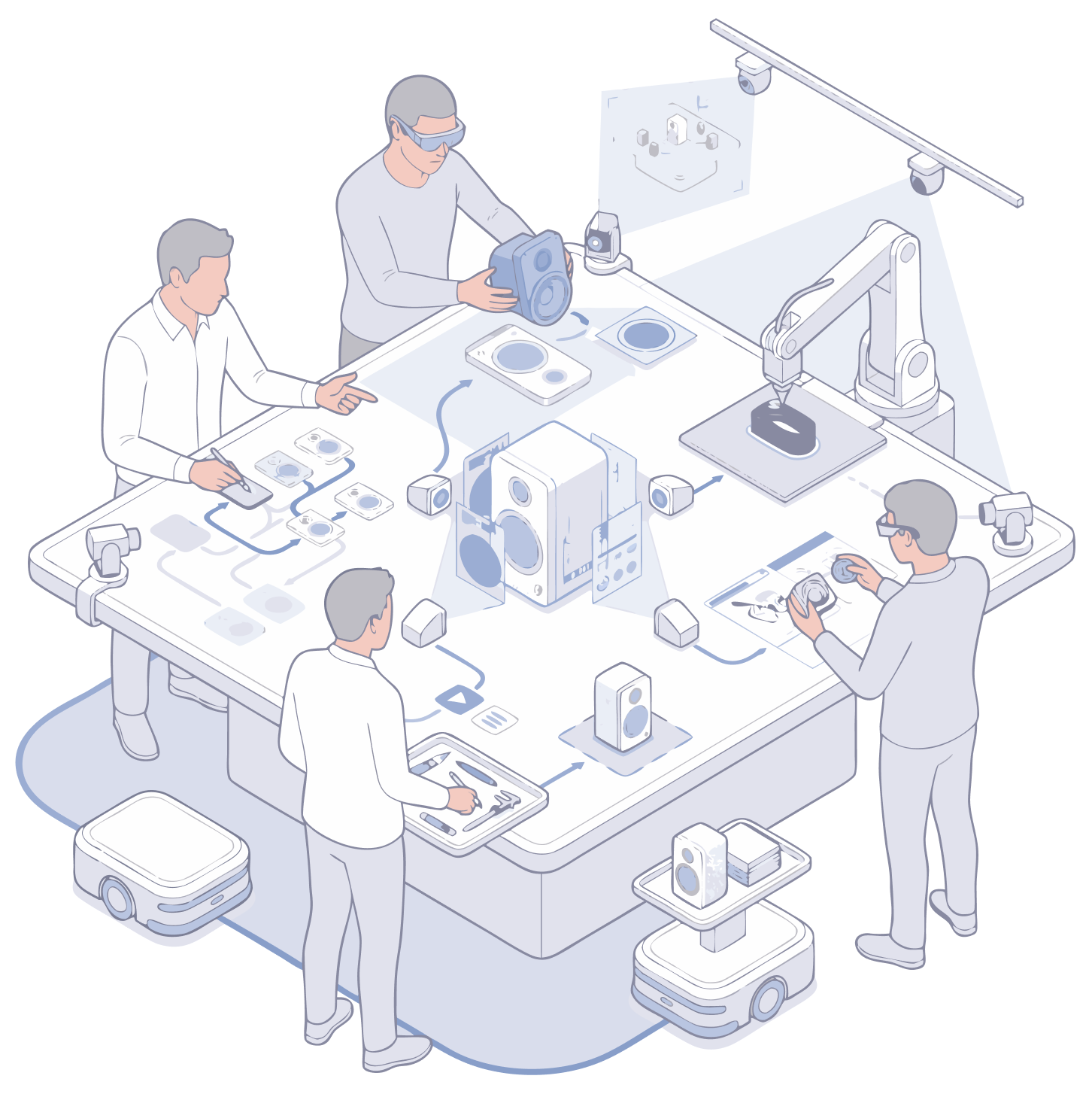
We propose a hybrid prototype method that combines physical models with generative AI to support creativity in the early conceptual design phase.
ProtoDreamer is a mixed-prototype tool that enables designers to combine physical models with generative AI for rapid conceptual design exploration.
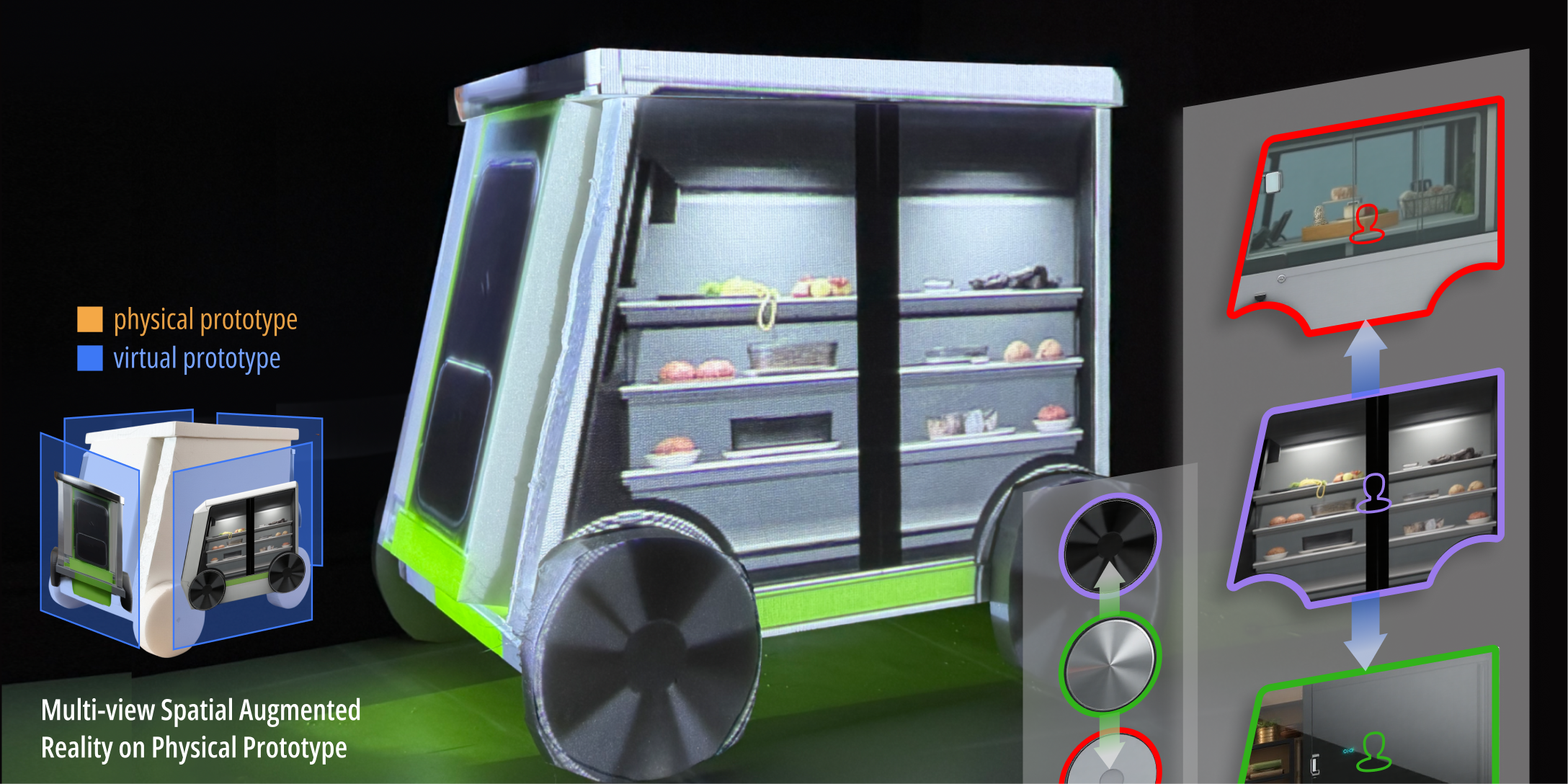
Conceptual design is an important stage in industrial product development, influenced by the design space and materials available to designers. Advancements in human-computer interaction (HCI) and artificial intelligence (AI) technologies have broadened these aspects considerably. On the one hand, augmented reality (AR) technologies merge physical and virtual representations to enhance intuitive interaction and embodied cognition. On the other hand, generative artificial intelligence (GAI) serves as a novel design material, boosting creativity and productivity. Inspired by these technological strides, we proposed an Intelli-Embodied Design Space (IEDS), which integrates designers, AR, and GAI to support industrial conceptual design by combining embodied interaction with generative variability. Within IEDS, designers can interact with the physical prototypes intuitively, while GAI refines these into virtual forms that can be embedded in the physical world through AR technology. In this study, we established the theoretical framework and interaction modes of IEDS through literature reviews and expert interviews. Subsequently, we designed and implemented three GAI+AR tools, GAI + Head-mounted Display (HMD), GAI + Handheld Display (HHD), and GAI + Spatial Augmented Reality (SAR), based on three AR approaches in IEDS to practically examine the benefits and challenges of these interaction modes across industrial conceptual design tasks. We discussed IEDS's influence on industrial conceptual design and released its application guidelines to the HCI community.
FusionProtor enables component-level physical-to-virtual transition and simulation, bridging the gap between physical prototypes and digital simulation.
We explore how mixed reality can enhance design representations to support user-involved co-design communication.
We elicit and evaluate a hand-based interaction language for 3D conceptual design tasks in mixed reality environments.
Painting++ enables human-computer collaborative painting in VR through multisensory interaction combining visual, haptic, and auditory feedback.
We explore how AI awareness influences human-AI collaboration dynamics in design tasks.